Dogtown
is out!
The 12th Willie Black mystery, and Howard Owen's 22nd novel overall, has
been released. Here's what the Associated Press's reviewer said about it:
“Dogtown,” by Howard Owen (Permanent Press)
Willie Black is a multi-racial,
60-year-old reporter who covers the night-cops beat for a dying Richmond, Virginia, newspaper. He smokes, drinks, and falls
in love too much, knows the sleazy side of his city as well as he knows his own face, and is fiercely dedicated to a profession
that has not been kind to him.
Author Howard Owen, a former Virginia
newspaperman himself, first introduced Willie in “Oregon Hill” in 2012, and now, in the 12th book in this underappreciated
series of crime novels, the protagonist’s hold on employment is more tenuous than ever. The decline of print journalism
is a recurring theme in these books, and thanks to massive budget cuts and layoffs by a greedy, absentee corporate owner,
the newspaper to which Willie has devoted his life appears on the verge of cutting him loose.
As “Dogtown” opens, a plumber, Richmond’s first murder victim of the new
year, is discovered near the railroad tracks in a bad part of town, his throat cut and one of his fingers removed. When two
more victims are butchered the same way, Willie realizes the city he has a love/hate relationship with has a serial killer
on its hands.
With the police investigation going nowhere, Willie,
a dogged and skilled investigative reporter, sets out to end the reign of terror himself while at the same time generously
mentoring a young reporter who is after his job. Working long hours without overtime pay, he contends with a stonewalling
police chief, an ethically compromised mayor and even anti-vaxxers to bring the case to a disturbing conclusion.
In a sense, Willie is an archetype. Most newspapers in America have a veteran reporter or
two like him, battling against long odds to do the thankless job of holding public officials accountable while struggling
to keep his job and breathe life into the First Amendment. However, his quirks and his biting, self-deprecatory sense of humor
are all his own.
As always in an Owen novel, the writing is tight,
the dark story is leavened with humor, and Willie’s oddball collection of friends and ex-wives are as engaging as ever.
___
Bruce DeSilva, winner of the Mystery Writers of America’s Edgar Award,
is the author of the Mulligan crime novels including “The Dread Line.”
Starred
review in PW for Monument
Monument, the 11th book in the Willie Black series,
comes out in November. it just got a starred review in Publishers Weekly. Here it is:
 Monument: A Willie Black Mystery
Howard Owen. Permanent, $29.95 (256p) ISBN 978-1-57962-647-1
The summer of Black
Lives Matter protests provides the backdrop for Owen’s exceptional 11th mystery featuring Richmond, Va., newspaper reporter
Willie Black (after Jordan’s
Branch).
As Willie focuses on vandalism and counterprotests regarding “the overabundance of Confederate
statuary” along Monument Avenue, a middle-aged couple, the Kellers, are murdered in their home above their used bookstore.
The reporter gets pulled into the story on a personal level when he learns his first wife’s 19-year-old son, who’s
on the autism spectrum, was caught on a security camera leaving the crime scene and is now on the run. The daily tumult makes
grudging allies of Willie and media-loathing police chief L.D. Jones, who must walk an especially fine line as “an African
American police chief in a city where half the population and nowhere near half the money is Black.”
In a city on edge, the chief is fired briefly and rehired, but Willie makes the most of Jones’s
time out of office to dig deeper and find a plausible suspect from the Kellers’ past. The wild action that results from
Willie’s successful flushing of the real killer is bracing and crisp, and the tragic coda shows that solving a terrible
crime is no guarantee of a happy ending. Owen has outdone himself. (Nov.)
The Philadelphia Quarry in Italian
NN Editore
has released the Italian version of The Philadelphia Quarry, the second of the Willie Black mystery series. Its Italian
title: Il Country Club. Very happy to have a readership in Italy. When travel gets easier, a trip to Italy is definitely
in the works. The 11th Willie Black mystery (in English), Monument, will launch in November.
Willie goes to Italy
NN Editore
has published Oregon Hill, the first of the Willie Black series and winner of the 2012 Dashiell Hammett Award. The second
Willie Black mystery, The Philadelphia Quarry, will be published by NN Editore in 2021.
Jordan's Branch
Jordan's Branch comes
out at the end of February, but Publisher's Weekly already has reviewed it Here's the review:
Howard Owen. Permanent, $29.95 (232p) ISBN 978-1-57962-643-3
Early in Owen’s engrossing 10th Willie Black mystery (after 2020’s Belle
Isle), Willie, a world-weary reporter for a struggling Richmond, Va., newspaper, jumps at the chance to write the memoirs
of Stick David, an old drinking buddy, after Stick offers him $50,000, with $5,000 up front, for the job. Stick hints he’ll
reveal some secret information that will make the book a bestseller, but by the time Willie’s halfway through the first
draft, Stick has spoken about little beyond his sexual adventures. Following a missed appointment, Willie shows up at Stick’s
apartment to find him shot to death.
Willie’s investigations into the murder lead him into the world of homegrown terrorism, and he stumbles
on partial plans for an attack. The only problem is that Willie and the police “don’t know what, when, or where,
and the clock is ticking.” The bracing narrative is studded with wit and insight, as well as kick-butt action. Readers
will agree that it’s a pleasure to spend time in Willie’s company. (Feb.)
Finally
Belle Isle is finally coming
out. Publication was delayed in May because of the pandemic, which (as you might have noticed) is still with us. Nevertheless,
the ninth Willie Black mystery will be on the shelves, virtual and otherwise, soon. I'm doing a reading and signing at Chop
Suey in Richmond Sept. 16, 4-6 pm, socially distanced, and an online presentation through Fountain Bookstore in Richmond (www.fountainbookstore.com)
6-7 p.m. on Sept 17. the 10th Willie Black mystery, Jordan's Branch, comes out next year.
Here's
what Kirkus and Publisher's Weekly said about Belle Isle:
Vivid, snappy repartee-spouting characters support Willie, whose poignant and witty observations on newsroom shenanigans,
the current political climate, and the slow, inevitable decline of print media are funny and thought-provoking. Fans of contemporary
regional mysteries are in for a treat. -- Publisher's Weekly
Owen shines bright as ever in tracing the remorseless
pressures on his journalist hero, who’s so hard-pressed in his quest to uncover the big picture by the rush to meet
his daily deadlines for updates that he’s constantly in danger of missing the forest for the trees. The big story here: the surprising kinship between the journalistic
whodunit and the police procedural. -- Kirkus
Waiting for Belle Isle
"Belle Isle," which was supposed to come out in May, will be published in late August instead, when,
it is hoped, bookstores and libraries will be open again. In the meantime, this ninth Willie Black mystery is available as
an ebook and an audio book. Stay safe. Willie Black No. 10, "Jordan's Branch," is done and, it is hoped, will come
out next year.
Great AP review of Evergreen
By BRUCE DESILVA
The Associated
Press
This cover image released by Permanent Press shows "Evergreen," a release by Howard Owen. (Permanent Press
via AP)
Here's a great review of Evergreen by the Associated Press:
“Evergreen,” by Howard Owen (Permanent Press)
When Willie Black was 15 months old,
his father, Artie Lee, was killed in an apparent automobile accident. That’s all Willie — police reporter for
a Richmond, Virgina, newspaper — knows about his dad. He’s never been curious about the man.
That changes when Willie’s
aunt on his father’s side summons him to her deathbed. She’s been tending Artie’s grave in Evergreen, an
abandoned cemetery, and now it’s up to Willie to inherit the chore.
Readers of Howard Owen’s underappreciated Willie Black
novels already know that Willie’s father was black, that his mother was white, and that they weren’t allowed to
marry in 1960s Virginia. But in “Evergreen,” the eighth book in the series, they’ll grow as curious as Willie
about what really put Artie in his grave.
Finding out is no easy task.
Willie’s mother won’t say and urges Willie to
drop it.
Artie’s old pals reminisce about his saxophone playing but clam up about his death.
The police chief says
there were rumors that the car crash was no accident but has no details.
Old newspaper files are no help. The death of a black man
didn’t merit a news story in 1961 Virginia.
Patiently, Willie squeezes a few minor details from townsfolk old enough to
remember Artie. Each time he gets a scrap of information, he circles back, telling the witnesses what he knows and teasing
out a bit more. He does this so skillfully that it is a pleasure to watch him work.
Eventually, he learns that Artie’s
death was connected to a Ku Klux Klan rally, a car bombing and a series of betrayals by friends and relatives who were threatened
by racist police officers unless they talked. The result is a conclusion that is both wrenching and satisfying.
Readers
seeking the thrills of most popular crime fiction won’t find it here. Instead, they will find a textured, emotionally charged tale about coming to terms with growing
up biracial in America told in the precise language of a writer who honed his craft during 44 years in the newspaper business.
Evergreen
Here's a pre-publication
review from Kirkus:
Richmond crime reporter Willie Black accepts a commission to clean up his unknown father's grave and ends by cleaning
up a whole lot more. Willie's never known much about Artie Lee like where he's buried or when and how he died. So when his
cousin Philomena Slade, brought to a hospital she's clearly not going to leave, says she wants to talk to Willie about his
father, he has decidedly mixed emotions. Of course he's going to do whatever he's asked by his cousin, one of the few truly
decent people in his family tree. But clearing Artie's plot at Evergreen Cemetery turns out to be only the tip of the iceberg,
for Willie can't rest until he finds out what put his father there in the first place. A series of conversations with the
surviving members of the Triple-A's—Artie's ancient friends Arthur Meeks and Arkie Bright—reveals mainly that
they really don't want to talk about the one-car encounter with a tree that killed Artie back in 1961, when his son was just
learning to walk, and his dying newspaper's files add precious few details. Willie's big discovery concerns the aftermath
of a Ku Klux Klan rally the year before, when a car bombing killed married police officer Phillip Raynor and his companion,
22-year-old Julia Windham, whom friends said he'd offered shelter from a thunderstorm that the weather pages from that date
don't mention. Unearthing the connection between their murders and Artie's death six months later would be a challenge under
ideal conditions, and Willie's conditions—working 57 years later under the watchful eye of Benson Stine, yet another
know-nothing representative of the conglomerate owner MediaWorld, who loads him with new responsibilities and forbids him
to spend any time working on his own concerns during the paper's time, which is all the time—are anything but ideal.
Middling for a series (Scuffletown, 2019, etc.) whose most distinctive features are its sharp eye for the mixed-race hero's
heavy burdens, including, but not limited to, the decline and fall of print journalism.
And another one from Publishers Weekly
Howard Owen. Permanent, $29.95 (254p) ISBN 978-1-57962-573-3
In Owen’s low-key eighth Willie Black mystery (after Scuffletown), a dying relative unexpectedly asks
Willie, a Richmond, Va., crime reporter, to take over as caretaker of his father’s grave in Evergreen, the city’s
historic African-American cemetery. As a child of mixed-race parents prohibited from marrying by Virginia racial laws, Willie
knows virtually nothing about his father, Artie Lee, other than that he died in an auto accident in 1961, when Willie was
an infant. Prompted by curiosity to look up the details of the accident, he soon faces some puzzling questions: Why are his
elderly mother and Artie’s surviving friends reluctant to talk about what happened? And why does the police chief direct
his attention to a deadly explosion that took place at a Ku Klux Klan rally the year before the accident? Willie’s plunge
into the city’s racially turbulent past generates little suspense, and only toward the end do the strands come together
for an emotionally satisfying conclusion. Willie, meanwhile, remains the same witty and humane character as ever. Readers
will hope he has a long run. (July)
Scuffletown
The next Willie Black novel,
Scuffletown (The Permanent Press), comes out later in January. This is Willie's seventh mystery and my 17th novel.
I never thought, when I started writing fiction back in 1989, that it would go this far. Scuffletown, by the way, refers to
Scuffletown Park, a hidden gem of a pocket park in Richmond's Fan District. The eighth Willie Black mystery, Evergreen, will
come out later in 2019. Happy New Year.
Podcast news
Here's a link to a podcast the Permanent Press did recently
about my books, including Annie's Bones, which came out in May, and the next two (both Willie Black) mysteries, which come
out next year. Scuffletown debuts in January, and Evergreen will be toward the end of 2019.
https://www.buzzsprout.com/195266/764814-howard-owen-interview
Annie's Bones
My 16th novel, Annie's Bones, is out. Here are a couple of very nice pre-pub review from Publishers Weekly and The Associated Press:
Publishers Weekly March 16, 2018
Annie’s Bones by Howard Owen. Permanent, $29.95
(264p) ISBN 978-1- 57962-522- 1
In 1968, Grayson
Melvin, the protagonist of this moving, well-crafted standalone from Owen (The
Reckoning), meets the love of his life, Annie Lineberger, when they’re both college students in North Carolina. When Annie breaks up with him, he tells her to get out of his car. She scrambles out and is never seen again. Grayson is the primary suspect in her disappearance, but without any evidence he moves on—always followed by a cloud. In 2016, Annie’s bones are found in Portman, Va., and Grayson’s nightmare begins again. He gets support from only a few people, including Richmond, Va., reporter Willie Black (the lead of Owen’s The Devil’s Triangle and five other mysteries). Arrayed against him are public opinion, seemingly every lawman in the area, and Annie’s unforgiving brother, Hayden. The discovery of Grayson’s
high school senior class ring, which he last saw when he refused to take it back
from Annie at the time she left him, puts Grayson on a tortuous path that eventually
leads to answers that may or may not explain what happened. This tale of loss and
redemption will resonate with many readers.
(Apr.)
Associated Press review of Annie's Bones
“Annie’s Bones” (Permanent Press), by Howard Owen
Grayson Melvin was just 18 when Annie, the girl of his dreams, broke
up with him in a North Carolina college parking lot. Weeping, she ran from his car and disappeared into the night.
The loss of love was crushing, and then things got worse. When Annie
failed to reappear, everyone including the police, the media and the girl’s family thought Melvin must have killed her.
Without a body, they didn’t have enough evidence to convict him, but they weren’t about to give up.
For decades, the police dogged him, demanding to know what he’d
done with her. And Annie’s influential family never stopped hounding him, getting him fired from job after job.
“Annie’s Bones” is the 16th
novel by Howard Owen, whose most popular series character, investigative reporter Willie Black, makes only a cameo appearance
in this stylishly written, sobering tale of suspicion, vengeance, injustice and a man’s last, desperate chance for redemption.
It comes nearly 50 years later when a backhoe
operator clearing land for a new mall digs up Annie’s bones and an ambitious prosecutor, seeing the case as his ticket
to higher office, sets his sights once again on Melvin.
His situation appears hopeless until a stranger calls him with startling news. She has found Melvin’s
high school ring in a handful of old stuff she bought in a junk shop.
The last time Melvin had seen the ring, it was on Annie’s finger.
Melvin’s only hope is the longest of long shots — that it might be possible
to trace the ring back to the real killer. Mistrustful of the police, the old man sets off on the quest himself, seeking not
only to prove his innocence but also to finally learn what happened to the girl he loved.
Finalist for Silver Falchion Award
Grace is one of the finalists for
Killer Nashville's Silver Falchion Award for Best Fiction Adult Mystery in the U.S.
Starred review in PW!
Publishers Weekly April 14, 2017
The Devil’s Triangle, by Howard Owen. Permanent,
$28 (240p) ISBN 978-1-57962-499-6
Here's the (starred) Publishers Weekly review of The Devil's Triangle, my 15th novel and
sixth Willie Black mystery, which comes out in June.
At the start of Owen’s
superior sixth outing for Richmond, Va., reporter Willie Black (after 2016’s Grace), a twin-engine Beechcraft plane
crashes into the Dark Star bar, killing 22, injuring 29, and fueling wild speculation about the cause of the crash. Was it
a terrorist act, suicide, or an accident? The pilot is identified as David Biggio, a former Richmond resident who was once
arrested for stalking his former wife; the plane belonged to James “Chopper” Ware, who owns a hardware store in
a tiny town on the Chesapeake Bay. Black uses all his journalistic resources, including such strong supporting characters
as Peachy Love, the police media relations person, and elderly Jumpin’ Jimmy Deacon, who gives him a lead to Biggio’s
ex-wife. As usual, Black finds himself at odds with police chief Larry Doby Jones and with his newspaper’s publisher,
Rita Dominick. An unexpected insurance policy, the discovery of a murder victim, and a man’s hidden past keep Black
digging. Owen’s informed treatment of Richmond and its declining daily paper is perfect. (June)
First review of The Devil's Triangle
Good review from Kirkus on the latest Willie Black mystery, out in June. Here's the kicker:
"Owen produces another grim, tightly woven, and resolutely professional piece of work with a memorably nightmarish
payoff."
Howard Owen is a novelist and journalist...
Struck
by either an epiphany or a midlife crisis, Howard Owen wrote his first novel, "Littlejohn," at the age of 40. The
first draft took him about 100 days. At the time, Owen was a sports editor at The Richmond Times-Dispatch. He retired in April
as editorial page editor of The Free Lance-Star in Fredericksburg after 44 years in journalism. Before retirement, he never
took a sabbatical, adhering instead to a schedule that includes about an hour a day for writing or revising. He finds that
it is possible to do great things with an hour a day, every day. Now, in retirement, he has even more time to write. Owen's
tenth novel, "Oregon Hill," published in 2012, won the Hammett Prize for best crime literature in the U.S. and Canada,
given by the International Association of Crime Writers. The sequel, "The Philadelphia Quarry," came out in July
of 2013. The third Willie Black mystery, "Parker Field," was published in 2014. The fourth, "The Bottom,"
came out this year. The fifth, "Grace," came out in October of 2016. The sixth, "The Devil's Triangle,"
comes out in June and just got a starred review in Publishers Weekly.
Here's a brief summary
of my career so far:
Books by Howard Owen and their reception[edit]
Littlejohn (1992)[2] was the first novel[3][4] by Owen[5] and he was 43 years old when it was first published in 1992. It was followed by Fat Lightning in
1994,[6]and Answers to Lucky (1996).
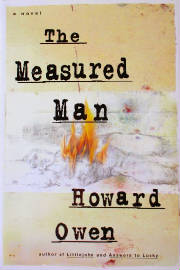
His fourth novel, The Measured Man,[7] was published in hardcover by Harper Collins in 1997. It was praised in The New York Times, The Los Angeles Times,Publishers' Weekly, Kirkus Reviews, the Raleigh News & Observer, the Orlando Sentinel, and the Fort Lauderdale Sun-Sentinel. Chosen as one of the Los Angeles Times Book Reviews’ "Recommended Titles" for 1997, it was also included
in The Best Novels of the Nineties: A Reader’s Guide.[8]
His fifth
novel, Harry and Ruth, was published by The Permanent Press in September of 2000 to critical acclaim from Kirkus, Publisher's Weekly and various weekly publications.
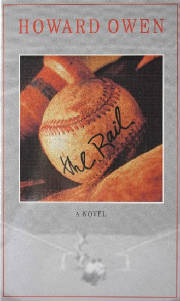
His sixth novel, The Rail, was published in April of 2002. It is about (among other things)
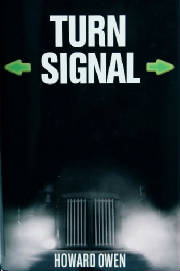
baseball and the parable of the talents. Owen won Richmond Magazine's 2002 Theresa Pollak Award for Words. His seventh novel, Turn Signal, came out in 2004 and was a Booksense selection for July of 2004. His eighth novel, Rock of Ages, is a sequel to his first novel, "Littlejohn."
It was a Booksense pick for July of 2006. His ninth novel, The Reckoning,'[9] about ghosts of the ’60s, came out in late 2010 and received very positive reviews from, among others, Publishers Weekly and the New York Journal of Books.
An Owen short
story, "The Thirteenth Floor," part of Richmond Noir, came out in early 2010. The protagonist of “The
Thirteenth Floor,” Willie Black, also is at the center of Owen’s 10th novel, Oregon Hill,' which
was published in July of 2012 to positive reviews in The New York Times, Publishers Weekly, and Kirkus.Oregon Hill has also been released as an audio book. Willie was a central character in future Owen novels: The
Philadelphia Quarry[10] (2013), "Parker Field" (2014) and "The Bottom" (2015). The fifth of the Willie Black novels,[11] Grace,[12][13] was published in 2016. The Devil's Triangle (The sixth novel in the Willie Black series) is
scheduled for release in 2017.[14]
Regarding Oregon
Hill,[15] a New York Times critic said Howard Owen is "a writer we can't wait to hear again. . . .Owen knows his setting, his dialogue is
spot-on, and his grasp of the down-and-dirty work of the police and news reporters lends authenticity to the narrative. This
is Southern literature as expected, with a touch of noir and with a touch of Dennis Lehane’s Mystic River." Another NYT writer in the Sunday Book Review said, "Owen has recruited his sick, sad and creatively crazy characters
from a rough neighborhood cut off from the rest of the city when the expressway was built. If anyone is watching out for the
forgotten citizens of Oregon Hill, it’s Willie, who grew up there and speaks the local language, a crisp and colorful
urban idiom we can’t wait to hear again.[16]
Littlejohn was
nominated for the (American Booksellers Association) Abbey Award and the (Barnes & Noble) Discovery award for best new fiction. Littlejohn has sold more than 50,000 copies and has been printed
in Japanese, French and Korean. The book has also been a Doubleday Book Club selection, and audio[17]and large-print editions have been issued. Movie option rights for the book have been sold. All his subsequent books
have continued this initial popularity and have garnered additional awards and favorable reviews. Littlejohn,[18] The Philadelphia Quarry,[19] The Bottom,[20] and Parker Field[21] are available to read free as online books.
Biography[edit]
Howard Owen was born March 1, 1949, in Fayetteville, North Carolina. He and his wife since 1973, Karen Van Neste Owen[22] (the former publisher of Van Neste Books), live in Richmond, Virginia, a city which is the setting for much of his writing and the residence of one of his favorite fictional characters, Willie
Black.
He was
a 1971 journalism graduate from the University of North Carolina at Chapel Hill, and he earned a master's degree in English from Virginia Commonwealth University in 1981.
Owen
was a sports editor at The Richmond Times-Dispatch[23] and editorial page editor of The Free Lance-Star in Fredericksburg, Virginia. He spent 44 years as a newspaper reporter and editor. He wrote his first novel, Littlejohn, in 1989, when
he was 40. Littlejohn was bought by The Permanent Press and published in 1992.Random House bought it from The Permanent Press and reissued it as a Villard (imprint) hardcover in 1993 and a Vintage Contemporary paperback in 1994.
He was awarded the Hammett Prize in 2012.[24] He was a featured guest at the "Festival of the Written Word" in Chesterfield, Virginia in 2015.[25]
Latest review for The
Bottom (Aug. publication)
New York Journal of Books August 31, 2015
The Bottom by Howard Owen (Willie Black Series, Book 4)
Reviewed by D. R. Meredith
“The Bottom by Howard Owen races along at breakneck speed,
hardly pausing long enough to allow one to catch a breath.”
Willie Black, hard-smoking and hard drinking crime reporter for a Richmond, Virginia,
newspaper is trying to reform after a drunken argument with girlfriend Cindy. “I hardly drink anymore, and I’ve
cut way back on the Camels.” Willie is exaggerating as he admits to himself. “Of course, this means two drinks
a day instead of six and maybe six cigarettes instead of a pack.”
The point is that Willie is trying to be a better person, but one area where he has
no intention of changing is his obsession to track down a story, tackle it to the ground, and write it up for the front page.
“I just want to get a story and sink my teeth into it like a pit bull with anger issues.”
His current story is the Tweety Bird Killer, a serial killer who in
the last eighteen months has killed four young women and tattooed the cartoon character on their ankles. Willie is not above
lying to get his story. Perhaps lying is the wrong word. When he interviews the guard of the train station where the body
is dumped, Willie doesn’t lie, not technically anyway.
“I tell him I have a few more questions about the dead body that somehow materialized
just outside the lobby, on his watch. I somehow forget to mention that I’m asking on behalf of our shrinking readership
rather than the police.”
Thanks
to this oversight on Willie’s part, he learns the guard was lured from his post to a bar by a phone call from Willie’s
own daughter, Andi. This is not good news. Willie is not happy to see Andi involved even in a small way in the Tweety Bird
Case.
“I got this call,
on my cell. The guy said there was an envelope under the napkin at the bar. . .there were two twenties and a note. The guy
said one twenty was for me and the other one was for drinks for this guy I was supposed to call.”
Willie’s problem is to track down whoever made the phone call,
a difficult job since he has no idea who he is looking for. Neither do the police until a low life photographer named Ronnie
Sax started showing his neighbor some porn shots of underage girls. The neighbor calls the cops, who find photos of two of
the victims on Ronnie’s computer.
This is not Ronnie’s first arrest on porn charges. On the previous occasion Willie was blunt about his feelings.
“As the father of a daughter, I think now that, in a similar situation, I might have shot Ronnie Sax.” Still,
as a serial killer Ronnie Sax is not a serious suspect as far as Willie Black is concerned.
A better suspect is Wat Chenault, a fat, aging former state senator,
whose political career was torpedoed when Willie discovered that Chenault was cavorting with a 14-year-old girl in a hotel
room, and wrote a story about it, with an accompanying photo.
Chenault is suing the newspaper because Willie resurrected the story after the sleazy Chenault
announces plans to develop The Bottom, a section of old Richmond where an unmarked slave cemetery is supposed to exist. Willie
is bi-racial, and it’s possible some of his father’s ancestors are buried in that cemetery.
Putting aside Chenault’s plans for real estate development,
the slave cemetery, and his penchant for underage girls, there is the fact that Willie can find no trace of the teenager who
originally ripped away the former state senator’s mask of respectability. She disappeared shortly after Willie originally
broke the story and has not been seen since.
Ronnie Sax is arrested. The Tweety Bird Killer is in jail. Richmond women are safe. When Willie receives letters
from someone claiming to be the real killer, and furthermore reveals details about the victims that the police have withheld
from the public, Willie knows the murderer is still free. “Sax looks like a natural. I was pretty much ready to pull
the switch myself. Now, with the letter, I’m not so sure.”
If the Tweety Bird Killer isn’t Ronnie Sax, and it isn’t Wat Chenault, and
Willie now has a good reason to believe that Wat may be a scumbag, but not a killer, then who is raping and murdering the
young women of Richmond?
The Bottom by Howard Owen
races along at breakneck speed, hardly pausing long enough to allow one to catch a breath. Written in sparse journalistic style, with few adjectives and no unnecessary words,
The Bottom features wonderful characters who are just eccentric enough to be amusing without being stereotypes. While
some mystery fans may not care for Willie’s use of profanity, it is appropriate to his character. This is a perfect
read for those who like their mysteries blunt and to the point.
The Bottom
Here are some nice
pre-publication reviews for The Bottom, the fourth Willie Black mystery. It comes out in August.
Publishers Weekly
Howard Owen. Permanent, $28 (208p) ISBN 9781579623920
Willie Black has the tenacity of a bulldog when chasing a story or a bad guy, as shown in Owen’s satisfying
fourth mystery featuring the Richmond, Va., newspaper reporter (after 2014’s Parker Field). A serial
killer dubbed Tweety Bird has just claimed his fourth victim, a 14year old girl, probably a runaway, found in Richmond’s
rundown Main Street train station. On her ankle is the killer’s signature tattoo of a cartoon bird. After the police
arrest sleazy photographer Ronnie Sax for the crime, Willie starts receiving threatening handwritten letters with information
only the killer could know. Meanwhile, a former state senator is pushing an ambitious development plan for the Richmond neighborhood
known as the Bottom, much to its residents’ dismay. Willie carries a lot of personal baggage, including a fractured
(but not broken) family, three divorces, a couple of rocky romances, and a drinking problem sort of under control, but readers
can count on him to deliver in the end. (Aug.)
Booklist
June 1, 2015
Aug 2015. 208 p. Permanent Press, hardcover, $28. (9781579623920).
Newspaperman Willie Black was born 60 years too late, and he’s unhappy about
it. His century’s
reporters were bourbon soaked, and when they weren’t playing
poker, they were bringing down
scoundrels. Nowadays, the birdcage liner—his term—Willie
works for in Richmond, Virginia, is
staffed by sycophants and run by weasels, and he loves
to tell us all about it. His rants are
interrupted by murders he must solve. This time (following
Parker Field, 2014), someone is
killing teenage girls, and after the cops jail a former
newspaper photographer, Willie still has his
doubts. After all, he keeps getting letters
from someone claiming to be the real killer. And he has
inside dope. As the story unfolds,
Willie faces the killer, battles a greedy developer’s plan to
junk up the landscape,
and installs a spine in the newspaper’s publisher—all the while displaying
an
easy humor and a sweet good nature that belies his cynicism. At one point, he wonders if his
woman
could really care about, “a 53-year-old bald man who needs to lose weight.” Of course,
she could. We do. — Don Crinklaw
Kirkus Reviews Review Issue Date: June 15, 2015; Online Publish Date: June 4, 2015
THE BOTTOM Author: Howard Owen
Publisher:Permanent Press Pages: 208; Price ( Hardcover ): $28.00; Publication Date: August 31,
2015; ISBN 978-1-57962-392-0;Category: Fiction; Classification: Mystery
Willie Mays Black, reporter/drinker/police
gadfly, searches for a serial killer in Owen's (Parker
Field, 2014, etc.) fourth crime caper.
Young women, each corpse marked with a distinctive
tattoo, have been discovered in Richmond,
Virginia. Ronnie Sax, one-time photojournalist, full-
time pornographer, possessed all the right
perversions, and the cops jailed him. Even Willie
thinks he's guilty until he begins getting
threats that his single, pregnant, bar-tending, college-age
daughter, Andi, will be targeted
unless Sax is released. Sax's sister provides an alibi, and he's
freed. Willie's suspicions
turn to an ex-pol he exposed for bedding an underage girl. Now
lobbying to desecrate a slave
burial ground with big box stores, that fellow, Wat Chenault, is
"fronting for a bunch
of bright-eyed hustlers who claim they'll grow the tax base." Owen drops
deft characterizations
page upon page: Willie as "a busybody who loves getting paid to snoop,"
and the
true killer as "something out of the latest chainsaw movie." Clean and clear, not an
extraneous
word or scene, Owen's plot flashes along like a tense edition of Law & Order: SVU.
A
former reporter, Owen enjoys knifing the newspapers business's bean counters, eager to ignore
breaking
news in pursuit of the bottom line. A little black comedy provides the knife twist when
a
former publisher makes the obits after an unfortunate meeting of Segway and city bus. Owen
incorporates
regulars like Willie's mother, the dope-smoking Peggy; Awesome Dude, Peggy's
part-time lodger
and part-time street wanderer; and Sarah, a young female reporter Willie fears
may give
up the news beat to chase a bigger paycheck. Owen has a solid grip on people and
lace and
the social and racial tensions buzzing through a city haunted by history—a perfect
milieu
for nuanced crime capers.
Pulp
Den http://pulplair.blogspot.com/2015/04/the-bottom.html, Night To Dawn Magazine
The
Bottom (Murder Mystery) by Howard Owen Rating 5-Stars
“A Masterful Tale
of Murder and Mystery.”
Richmond, Virginia is going through
some growing pains at the moment, as an ex-senator, now
a building contractor, is trying
to build a business center on the site where slaves were buried
and the black community
is up in arms. Newspaper crime reporter, Willie Mays Black is on their
side, but he and
the ex-senator have a past connection that goes back to when the ex-senator
was caught in
bed with a 14-year-old girl, and Willie helped ruin his political career. The ex-
senator is looking
for reasons to sue the newspaper because of Willie and their stand against
his building
project. But Willie has other problems at the moment. The fourth victim of the
Tweety Bird
killer was just found at the train station, and Willie is working on that case. The
victims
are all young girls, runaways, raped and tortured, then tattooed with the image of
Tweety
Bird on their ankle before they were killed. Willie thinks that maybe the ex-senator is
the
guilty party due to his preference for underage girls. Now, the lawsuit may bring a stop to
his
investigation.
This was another fantastic Willie Black murder mystery in his little community
of Richmond. The
author recently retired after 44 years as a veteran newspaper man, and
knows the inside and
outs of newspaper work The reader is pulled into the story, and the
characters come alive; the
reader may even want to drop by Penny Lane for a couple of beers
and a Camel with Willie,
listening to his tales of growing up on The Hill, while he’s
taking a break from the office. This is a
masterful tale of murder and mystery, and Willie
Black isn’t afraid of stepping on
toes—publishers, police or perps. Highly recommended.
Tom Johnson, Detective Mystery Stories
Woo-hoo!
OREGON
HILL NAMED WINNER OF NORTH AMERICAN HAMMETT PRIZE
The North American Branch of the International Association of Crime Writers is pleased to announce
that Oregon
Hill, by Howard Owen (Permanent), has been named the winner of the organization's annual HAMMETT PRIZE for a work of
literary excellence in the field of crime writing.
The winning title was chosen by a group of three distinguished outside judges: Rob Dougherty, Manager of the Clinton Book Shop, in New Jersey; Janet Groth, author of The
Receptionist: An Education at The New Yorker;
and Edward D. Miller, professor of Film and Theatre (CUNY),
and author of Tomboys, Pretty Boys, and Outspoken Women: The Media Revolution of 1973. The judges selected
from among five finalists nominated from the hundreds of crime books published in 2012. These five titles were selected by
the organization's nominations committee headed by J. Madison Davis.
Other books nominated for the 2012 HAMMETT PRIZE were Defending
Jacob: A Novel(Delacorte), by William Landay; Truth Like the Sun: A Novel (Knopf), by Jim Lynch; Patient Number 7 (McClelland
& Stewart), by Kurt Palka; and Alif the Unseen (Emblem/Canada; Grove/US), by G. Willow Wilson.
Mr. Owen was awarded a bronze trophy, designed by West
Coast sculptor, Peter Boiger. The award ceremony took place on October 1, in Somerset, New Jersey, during the New Atlantic
Independent Booksellers Association’s (NAIBA) Fall Conference.
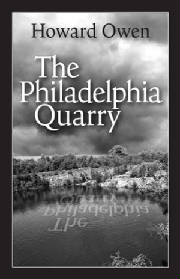
Willie Black is back in "The Philadelphia Quarry" a sequel to be released
in 2013
| The Philadelphia Quarry |
|
| To be published July 2013 |
Black is back. Willie Black was last seen, in Oregon Hill, risking
the final tattered remnants of his checkered career – and his life – to free a man almost everyone else believed
was guilty of one of Richmond’s most heinous murders.
Willie’s
still employed by the city’s daily newspaper, still covering the night police beat with its DDGBs and dirt naps, still
avoiding the hawk that periodically swoops down to pluck away a few more of his colleagues in a business that was foundering
even before the Great Recession. He still drinks too much, smokes too much and disobeys too much. The only thing that keeps
him employed: He’s a damn fine reporter. Even his beleaguered bosses would concede that.
In The Philadelphia Quarry (which will be published in July of 2013), Willie puts himself
on a collision course with a part of Richmond that a boy growing up in Oregon Hill could only experience through illicit midnight
sorties at the city’s most exclusive swimming hole. The Quarry was where Alicia Parker Simpson identified Richard Slade
as her rapist, 28 years ago. Then, five days after DNA evidence freed Slade from the prison system in which he had spent his
adult life, Alicia Simpson is shot to death at a stoplight en route to her gym.
Hardly anyone doubts that Richard Slade did it. Who could blame him? But Willie has his doubts. When the full weight
of the city’s old money falls on him, trying to quash the story, he only becomes more determined to get at the thing
that always seems to get him in trouble – the truth. The fact that Richard Slade is his cousin, a link to his long-dead
African-American father, only makes Willie more tenacious.
In the
end, Willie will be drawn back to the Philadelphia Quarry, where it all started so long ago and where the truth lies, waiting
to pounce.
The New York Times said Willie "speaks the local
language, a crisp and colorful urban idiom we can’t wait to hear again." Kirkus Reviews wrote, "Willie Black
deserves a sequel." Publishers Weekly added, "Readers will hope that Willie will soon return."
By popular demand, Willie’s back, and he’s not backing down.
Here's what the pre-pub reviewers are saying about The Philadelphia Quarry
Kirkus Reviews
Owen’s (Oregon Hill, 2012, etc.) hard-drinking Richmond reporter Willie Black has an inside
track on a blockbuster crime story that’s "red meat for the on-the-airheads."
Richard Slade, a 17-year-old African-American, spent three decades incarcerated for the 1983 rape
of debutante Alicia Parker Simpson, daughter of an old-money Commonwealth Club family. It was a he-said, she-said case relegated
to an incompetent public defender. Slade ended up in prison.
Now
Slade is proven innocent by DNA technology. Free only days, Slade is jailed again, charged with Simpson’s murder. It’s
another quixotic case for Willie Black, the perfect flawed hero, too often with the bottle, too often defying his bosses.
Willie long ago lost a prime beat and was shuffled to night duty,
but when
an innocent guy takes the fall, Willie thinks first
with his wrong-side-of-town, chip-on-the-shoulder mindset. Owen’s secondary characters are superb. Kate, an attorney
and Willie’s ex-wife No. 3, allows Willie to rent her Prestwould condo and keeps him out of court when he picks up a
DUI. She’s also on Slade’s case, seconding spotlight-hound Marcus Green, eager to prove "the racist system
can’t do it."
Willie’s marijuana-loving
mother, Peggy, reappears, as does venerable Clara Westbrook, one of the Richmond elite and now a resident of Prestwould. Peggy
offhandedly reveals that Willie and Slade are distantly related through Willie’s light-skinned African-American father,
and Clara gives him the down low on Alicia’s society-maven sister and schizophrenic brother.
Against a backdrop of advertising-suppressed investigative print journalism, Owen uses race and class,
coupled with a Faulknerian family tragedy, to provide a powerful narrative engine. While the complex noir drama keeps the
pages turning, crime-fiction buffs might identify the actual rapist early in the narrative, but the murderer and motivation
complete the storyline perfectly.
A quick-flowing crime
drama that will have fans eager for Willie Black to right another injustice.
Booklist
Narrator Willie, who charmed readers in Oregon Hill (2012),
is a hard drinking, old-style newsman who still takes notes with pen and pad and
takes his chances with the powers-that-be to get at the truth. A well-plotted mystery
elevated above the norm by Owen’s mastery of character development and his
creation of a compelling hero.
Publishers Weekly
Richmond, Va., reporter Willie Black proves himself a dogged, flawed,
and tarnished knight of the Fourth Estate in Owen’s strong sequel to 2012’s
Oregon Hill, a Hammett Prize finalist. Owen
has a knack for creating quirky but credible characters, from homeless “Awesome Dude” to Simpson’s aristocratic older sister, Lewis Witt.
Virginia Living TV Interview
(Howard Owen is the first interview on both the Virginia Living and Germanna Today TV shows.
You may see a short commercial first.)
Germanna Today TV Interview
Howard Owen on Virginia This Morning, WTVR Richmond
Please watch this space for more book signing
dates...
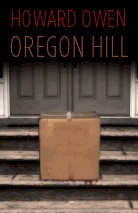
Hammett Prize finalist Oregon Hill...
| Oregon Hill |
|
| Newest Release |
Willie Black has squandered a lot of things
in his life - his liver, his lungs, a couple of former wives and a floundering daughter can all attest to his abuse. He's
lucky to be employed, having managed to drink and smart-talk his way out of a nice, cushy job covering (and partying with)
the politicians down at the capitol.
Now, he's back on the night cops beat, right where he started when
he came to work for the Richmond paper almost 30 years ago. The thing Willie's always had going for him, though, all the way
back to his hardscrabble days as a mixed-race kid on Oregon Hill, where white was the primary color and fighting was everyone's
favorite leisure pastime, was grit. His mother, the drug-addled Peggy, gave him that if nothing else. He never backed down
then, and he shows no signs of changing.
When a co-ed at the local university where Willie's daughter is a perpetual
student is murdered, her headless body found along the South Anna River, the hapless alleged killer is arrested within days.
Everyone but Willie seems to think: Case Closed. But Willie, against
the orders and advice of his bosses at the paper, the police and just about everyone else, doesn't think the case is solved
at all. He embarks on a one-man crusade to do what he's always done: get the story.
On the way, Willie runs afoul of David Junior Shiflett, a nightmare from his youth who's now
a city cop, and awakens another dark force, one everyone thought disappeared a long time ago. And a score born in the parking
lot of an Oregon Hill beer joint 40 years ago will finally be settled.
The truth is out there. Willie Black's going to dig it out or die trying.
Raves for Oregon Hill:
Willie Black
is all business — newspaper business. In OREGON HILL (Permanent Press, $28), Howard Owen’s world-weary
crime reporter covers the night beat for a hard-pressed daily in Richmond, Va. When Willie’s number comes up for downsizing,
he wins a reprieve by chasing the terrific story he’s working on here — about a headless corpse tossed in the
South Anna River. Owen has recruited his sick, sad and creatively crazy characters from a rough neighborhood cut off from
the rest of the city when the expressway was built. If anyone is watching out for the forgotten citizens of Oregon Hill, it’s
Willie, who grew up there and speaks the local language, a crisp and colorful urban idiom we can’t wait to hear again.
-- The New York Times
Owen knows his setting, his dialogue is spot-on and his grasp of the down-and-dirty work of the police
and news reporters lends authenticity to the narrative. This is Southern literature as expected, with a touch of noir, and
with a touch of Dennis LeHane’s Mystic River. Willie Black deserves a sequel. -- Kirkus The deft and surprising plot builds to a satisfying ending. Readers will hope that Willie will soon return in
a sequel. --Publishers Weekly
Owen is a careful, precise writer, creating characters
so real that we have to keep reminding themselves they’re fiction, and stories so haunting that they stay with the reader
long after the books are back on the shelf.--Booklist
Oregon Hill is a wondrous
trip into the world of sarcastic newspaper reporters, bad cops, and murder most foul. Mr. Owen writes in a captivating voice,
his acute observations granting authenticity to the bullet-speed pace of the story. Newspaperman Willie Black is masterfully
created, ink and dark humor coursing through his hardboiled veins. It is hoped that this is the beginning of a series of books
starring Willie and crew. Bring on the sequel!--New York Journal of Books
Reminiscent
of Carl Hiaasen’s Basket Case, Oregon Hill is as smart as it is thrilling, a true literary page-turner.--Small
Press Reviews
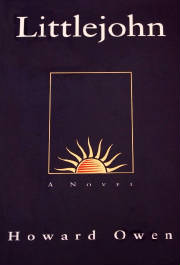
| Littlejohn |
|
| 1992 |
Littlejohn McCain, humbled by age and haunted by tragedy, goes out on the
hottest day of his 82nd year to put himself in God’s hands and reflect on a life in which tragedy and redemption lie
hidden beneath an exterior as quiet and humdrum as a Presbyterian hymn. Saddled with a learning disability, scarred
by his role in his brother’s death, deeply affected by the horrors of World War II, Littlejohn tells the reader everything,
including the secret of the beautiful Sara.
“Littlejohn is a beautifully written
novel, and Howard Owen has created a character as fully rounded in his quirks and imperfections, his quiet determination and
bravery, as any in recent fiction.” --Washington Post
“A warm and generous novel, a heartfelt celebration of the human spirit.”
--The New York Times
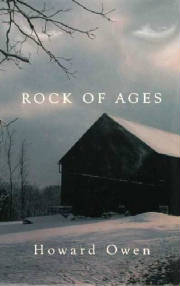
| Rock of Ages |
|
| 2006 |
Eleven years after her father’s death, Georgia McCain is back in East
Geddie, North Carolina, racked with Baby Boomer guilt and stumbling along between marriages. In this return to the terrain
of the best-selling Littlejohn, Littlejohn McCain’s daughter, here to sell the family farm, tries to come to grips with
the place she couldn’t wait to escape. She’s brought along her drifting son, Justin, and his pregnant girlfriend.
Making her life more interesting will be an overweight psychopath, taboo-flouting lust, a murder mystery and a tall, thin
ghost wandering the perimeter of her once and now-again home.
“Rich
in character and place, this murder mystery is also a haunting odyssey toward redemption and repatriation.” --Publishers Weekly
“This sequel to Littlejohn is beautifully
written and should appeal to readers of Southern fiction and to genre fans who favor character-driven crime stories.”
--Booklist
| Fat Lightning |

|
| 1994 |
Lot Chastain, who has dreams of eating the oily, flammable pine kindling known
as fat lightning, is generally avoided by the people of Monacan. He is, in the local parlance, full of meanness.
But when the image of Jesus appears in the moss-covered boards of his barn, thousands of tourists flock there. Soon, seduced
by a flimflamming female gospel preacher, Lot begins to capitalize on Jesus on the Barn and heads down a dark path that will
cause his smoldering core to burst into flames.
“A wise,
warm, deeply satisfying story that resonates with imagery invoking the spiritual tradition of such Southern writers as Faulkner
and Flannery O’Connor.”--Publishers Weekly
“Owen is a master
storyteller and a writer to be watched.”--Library Journal
| The Measured Man |
|
| 1997 |
Walker Fann is from the right family. He married the right girl. He lives on the
right street on the right side of town. But something’s gone wrong. Maybe he could have gone on forever enjoying
the world that three generations of Fanns had built for him and his progeny. But the voice of Mattie Gray, the shy,
pretty girl who shared his life and then left it, haunts him, pressing to win his soul. When a 13-year-old boy dredges up
a ghost from Walker’s past, he knows he must at last be measured. He will have to decide between the expedient thing
and the right thing.
“A journey of the soul that warms and cheers.” --Kirkus Reviews
"[A] nicely plotted novel inhabited by real people living in a real--and
thus complex--world. Fann's struggle to come to grips with his own limitations is well and plausibly detailed." --The New York Times
| Answers to Lucky |

|
| 1997 |
Tommy Sweatt, a North Carolina trucker driver with a fifth-grade education, has
a teeth-grinding desire to amount to something. In his twin sons, he sees the vehicle for his family’s deliverance,
and he pushes them toward his concept of greatness. When Lucky is crippled by polio in 1954, he becomes a non-person to his
father, who turns all his attention on the unscathed twin, Tom Ed. Forty years later, with Tom Ed running for governor and
Lucky working as his unpaid driver, all that Tommy Sweatt sowed is about to be reaped.
“The spiritual
progeny of Robert Penn Warren’s Willie Stark is alive and charming the pants off everyone in the wonderful new novel
“Answers to Lucky,” a 1990s version of “All the King’s Men.” --GQ
“A completely engaging story about the family ties that bind—tight—and the ego-pricking legacy
of growing up poor.” --Kirkus Reviews
“A quietly powerful narrative, a poignant study of sibling rivalry and family dysfunction.” --Publishers Weekly
| Harry and Ruth |

|
| 2000 |
Ruth Crowder Flood has always told Harry Stein not to torture himself, not to
let his life be ruined by what might have been. But he can’t help it, and neither can she: They both know just
how much can be lost by one bad decision. Now, late in the game, Harry is dying, and he wants to tie up a few loose ends.
As the second defining hurricane of Ruth’s life closes in, the time seems right.
“A winning story of human frailty and renewal.” --The New York
Times
| The Rail |
|
| 2002 |
Before he sabotaged his life, Neil Beauchamp was special, the glorious Virginia
Rail who terrorized American League pitchers. He lived and flourished in the world of privilege, adored and accommodated.
Then, it was gone. The only thing worse than spending your life earthbound, he would learn, is landing hard and knowing you’ll
never fly again. Now, long after the fall and just out of prison, the Rail has a chance at redemption, a chance to,
for once, not fail those who love him.
“The
pace is leisurely, the revelations apt and unexpected, and the coverage of professional baseball rings absolutely true.”
--Publishers Weekly
“With this rich, multi-layered
narrative focusing on a major league baseball star fallen from grace, Owen adds another volume to a remarkable body of work.”
--Richmond Times-Dispatch
| Turn Signal |
|
| 2004 |
No one thought Jack Stone of Speakeasy, Virginia, was the kind of man who would
try to solve his problems with a .38. But here he is, on a train to New York, armed and dangerously determined that
somebody is going to read his damn novel. Jack once had dreams of bigger things, but here he is, a long-distance trucker with
a shaky home life and one last chance to be special. All that New York editor needs is a little persuasion.
“A poison-pen letter to the publishing industry from Owen, whose loser protagonist hits the big time
once he stops playing by the rules.” --Kirkus Reviews
| Richmond Noir |

|
| 2010 |
"Richmond Noir" is a
collection of all-new stories by a variety of accomplished authors. Each story is set in Richmond, Virginia. In Howard
Owen's The Thirteenth Floor, a political reporter reassigned to the night police beat investigates a murder-by-gunshot
in his own apartment building.
About Owen's story, "...a well-done contemporary
fair play whodunit..." -- Publishers Weekly
Howard Owen Biography...
Award-winning writer Howard
Owen was born in Fayetteville, North Carolina. He graduated from the University of North Carolina at Chapel Hill with a journalism
degree and earned a master’s degree in English from Virginia Commonwealth University.
Howard's first novel, "Littlejohn," was
published by The Permanent Press in 1992. Random House bought and reissued it as a Villard hardcover in 1993 and a Vintage
Contemporary paperback in 1994. It was nominated for the Abbey Award (American Booksellers) and Discovery (Barnes & Noble)
award for best new fiction. It has sold, in all, more than 50,000 copies. It has been printed in Japanese, French and Korean;
it has been a Doubleday Book Club selection; audio and large-print editions have been issued, and movie option rights have
been sold.
Other
kudos for Howard Owen and his books:
· Starred reviews from Publishers'
Weekly.
·
Included in "The Best Novels of the Nineties: A Reader’s Guide."
· Included
in the LA Times Book Reviews’ "Recommended Titles" for 1997.
· Several of his novels have
been Booksense selections.
·
Owen won the 2002 Theresa Pollak Award for Words.
· His short story, "The Thirteenth Floor," was
included in "Richmond Noir” in 2010.
Howard lives in Richmond,
Virginia, with his wife Karen who is also an award-winning writer and editor.


